The Flatiron
The Flatiron
Alfred Stieglitz
United States
Configure your print
- Original Artwork
- Open Edition Prints available

The Flatiron
image
About The Artwork
expand_more
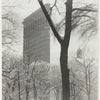
In an article in 1946, Stieglitz recalled photographing the newly erected Flatiron Building on the day of a great snowstorm. “I suddenly saw the Flat-Iron Building as I had never seen it before. It looked, from where I stood, as if it were moving toward me like the bow of a monster ocean steamer, a picture of the new America which was in the making.”
local_shipping
Shipping & Returns
expand_more
Processing & Delivery
Please allow 7-10 business days for your order to be processed and prepared for shipping. Note that delivery times vary depending on where your artwork is shipped from. You can see an approximate delivery range after you input shipping information at checkout. We’ll provide you with tracking info and an estimated delivery date after your order ships.
Returns
We want you to be 100% satisfied with your new artwork. That’s why we give you 14 days from the date you receive your artwork to let us know if it’s not the right fit for you. Contact us during that timeframe, and we’ll get started on your hassle-free return. Review our full Return Policy here.
send
Ask The Artist
expand_more
Have a question for the artist? Send them an email and we'll get back to you ASAP.
Artwork Type: Print
About the artist

A trailblazing photographer, Alfred Stieglitz vigorously championed photography as a fine art and established its value as modern art in America through his own work, the journals he published, and the shows he held at his influential New York galleries. He even served as a juror for the very first photography exhibition at the Art Institute of Chicago, held in 1900. After studying photography in Europe in the 1890s, Stieglitz came home to New York and turned his camera to the streets and buildings of a rapidly changing city. He printed these images initially as photogravures to emphasize atmospheric effects; later, when he published his fine art journal Camera Work, he insisted on lush, tipped-in photogravures for the images. During this early part of his career, Stieglitz also favored carbon printing, which produced deep tones and a soft, drawing-like quality.
Beginning around 1910, Stieglitz embraced more direct and straightforward images, moving away from a painterly, impressionistic approach. This directness was echoed in his use of photographic papers such as platinum, palladium, and later, gelatin silver prints. In his portraits of fellow artists he sought to represent their psychology and not merely their likeness. This approach is especially apparent in the dozens of views he made of his wife, Georgia O’Keeffe, which Stieglitz called a single “composite portrait.” Starting in 1922, Stieglitz also made nearly abstract photographs with studies of clouds he called Equivalents. He saw these as music in pictures, asserting that visual art could be as emotional and nonrepresentational as music. His later work, too, contained multiple meanings, whether a photograph of dying poplars at his family estate in Lake George that doubled as a meditation on human mortality or of New York City skyscrapers that embodied progress and modernity.
You might also like
FREE SHIPPING ON ALL ARTWORK!