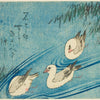
Oystercatchers
Oystercatchers
Utagawa Hiroshige
Japan
Configure your print
- Original Artwork
- Open Edition Prints available

Oystercatchers
local_shipping
Shipping & Returns
expand_more
Processing & Delivery
Please allow 7-10 business days for your order to be processed and prepared for shipping. Note that delivery times vary depending on where your artwork is shipped from. You can see an approximate delivery range after you input shipping information at checkout. We’ll provide you with tracking info and an estimated delivery date after your order ships.
Returns
We want you to be 100% satisfied with your new artwork. That’s why we give you 14 days from the date you receive your artwork to let us know if it’s not the right fit for you. Contact us during that timeframe, and we’ll get started on your hassle-free return. Review our full Return Policy here.
send
Ask The Artist
expand_more
Have a question for the artist? Send them an email and we'll get back to you ASAP.
Artwork Type: Print
About the artist

Utagawa Hiroshige is recognized as a master of the ukiyo-e woodblock printing tradition, having created 8,000 prints of everyday life and landscape in Edo-period Japan with a splendid, saturated ambience. Orphaned at 12, Hiroshige began painting shortly thereafter under the tutelage of Toyohiro of the Utagawa school. His early work of narrow, vertical landscapes picturing thatched houses nestled between cliffs and vignettes of birds perched on flowering branches shows the influence of Chinese scroll painting as well as the previously dominant Kanō school of Japanese painting.
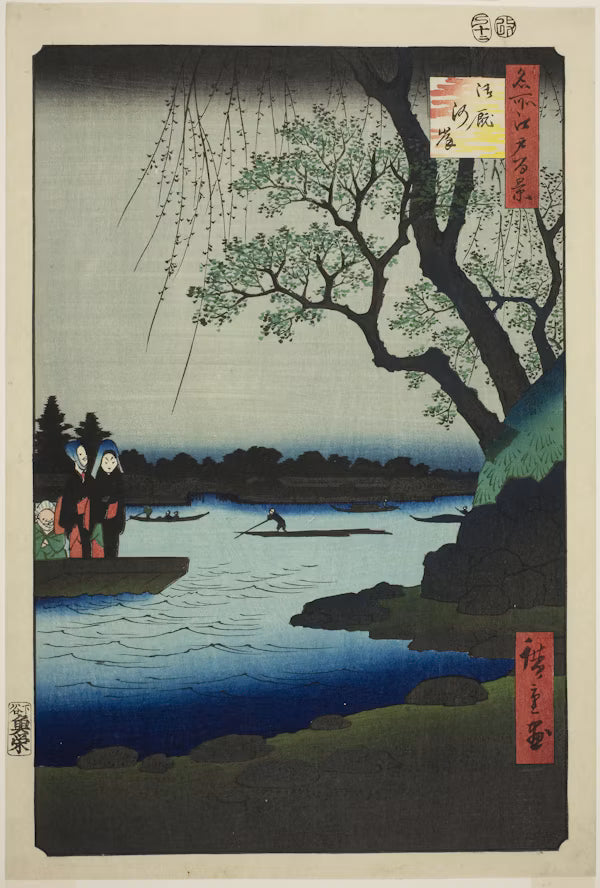
Much of Hiroshige’s work focuses on landscape. Partly inspired by Katsushika Hokusai’s popular Thirty-Six Views of Mount Fuji, Hiroshige took a softer, less formal approach with his Fifty-Three Stations of the Tokaido (1833–34), completed after traveling that coastal route linking Edo and Kyoto. Mountains grow green and bands of salmon-colored sunrise hang in the mist in prints like Maisaka No. 31, where traders and farmers mundanely pass by in the foreground.
Hiroshige’s prolific output was somewhat due to his being paid very little per series. Still, this did not deter him, as he receded to Buddhist monkhood in 1856 to complete his brilliant and lasting One Hundred Famous Views of Edo (1856–58). He died in 1858, 10 years before Monet, Van Gogh, Whistler, and a host of Impressionist painters became eager collectors of Japanese art. And so Hiroshige’s surging bokashi, or varied gradient printing, lives on visibly influencing artists like Paul Gauguin (see the Art Institute’s Mahana no atua, 1894) and Frank Lloyd Wright.
You might also like
FREE SHIPPING ON ALL ARTWORK!