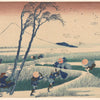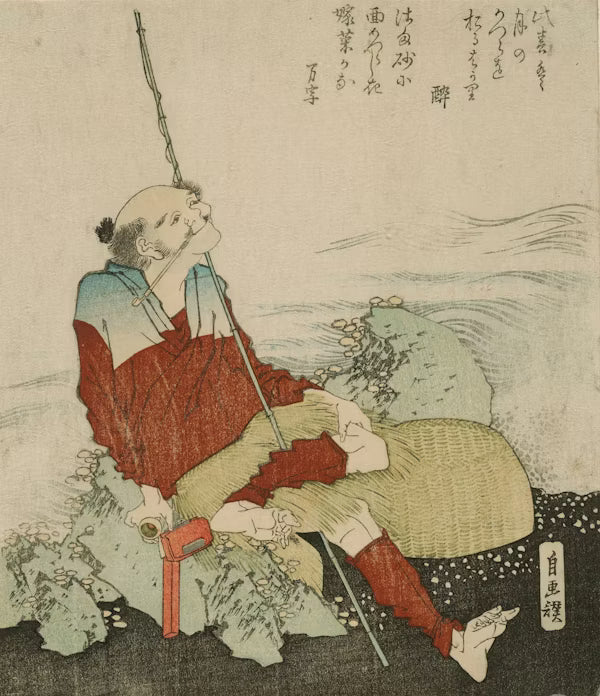
Ejiri in Suruga Province (Sunshu Ejiri)

Artwork Type: Print

Ejiri in Suruga Province (Sunshu Ejiri)

About the artist

Katsushika Hokusai’s woodblock print The Great Wave is one of the most famous and recognizable works of art in the world. This work is from Hokusai’s much-celebrated series Thirty-Six Views of Mount Fuji (Fugaku sanjûrokkei), a tour-de-force that established the popularity of landscape prints, which continues to this day. Hokusai spent the majority of his life in the capital of Edo, now Tokyo, and lived in a staggering 93 separate residences. Despite this frenetic movement, he produced tens of thousands of sketches, prints, illustrated books, and paintings. He also frequently changed the name he used to sign works of art, and each change signaled a shift in artistic style and intended audience.

When he was nineteen, he began working at the studio of Katsukawa Shunshô (1726–92), a well-known designer of actor prints. Initially, Hokusai followed in his teacher’s footsteps and produced prints of popular Kabuki actors, but his insatiable curiosity about different ways of seeing the world led him to study a multitude of artistic styles. These included the native Rinpa and Kano schools, as well as foreign modes based on Dutch imports such as oil paintings, copperplates, telescopes, and other optical devices. These influences can be found in Hokusai’s art, but it is his mastery and integration of styles that point towards his own personal, entirely new style. This maturity can best be seen in his Thirty-Six Views of Mount Fuji (Fugaku sanjûrokkei), series, which includes The Great Wave. The Art Institute owns three versions of this famous work, one of which retains the pink sky that is faded in almost every other copy. The museum’s collection includes a total of nearly 600 works by Hokusai.

FREE SHIPPING ON ALL ARTWORK!